By Stephanie Iken, Florida attorney, amateur guitarist, and music lover
Recently, my Facebook feed filled with photographs and arguments about the destruction of Les Paul’s longtime house in Mahwah, New Jersey. People wanted to know how a property so closely associated with one of the most influential musicians and inventors in American history could be allowed to be passed to a private party and demolished.
The first post I saw was Gene Paul describing the loss of his childhood home. Gene wanted to know why nobody gave his family a meaningful opportunity to say goodbye.
I lost my childhood home to Hurricane Katrina in 2005, so I feel Gene Paul’s grief. I know the particular pain that follows the disappearance of a place you assumed would always exist somewhere, even if you no longer lived there. A house holds family arguments, celebrations, scratched floors, favorite chairs, unfinished projects, and the ordinary objects that only become irreplaceable after they are gone.
Gene’s family home held all of that. It also held a workshop, a recording studio, an echo chamber, decades of experimental equipment, and evidence of musical innovations that changed how the rest of us hear recorded sound.
I am an attorney, an amateur guitarist, and someone who cares deeply about music history. That combination makes it difficult for me to read about a demolished family home, a charitable foundation with more than $40 million in assets, and a son who says he had no voice.
The easy version of this story would identify a hero, identify a villain, and accuse somebody of stealing an inheritance. But, the public record does not support that kind of certainty, and a lawyer should know better.
I have not reviewed Les Paul’s will, any trust agreement, the deed for the Mahwah property, the demolition permit, or a complete estate accounting. I do not know whether his children received separate financial support, who authorized demolition, or what instructions he left behind. Those are real limitations, and I am not going to pretend otherwise.
What we do have is unusually revealing: a federal patent identifying the house as Les Paul’s address, a 43-page Library of Congress finding aid, a Smithsonian interview archive, a 2000 Internal Revenue Service bulletin, years of private-foundation tax filings, a documented property-sale timeline, public statements from Gene and the foundation, and evidence that conflict over Paul’s legacy began long before the house came down.
Taken together, those records tell a more complicated story than social media does. They also raise a practical question for anyone creating an estate plan or private foundation: How do you preserve a public legacy without leaving your own family outside the door?
Les Paul’s Life and Legacy
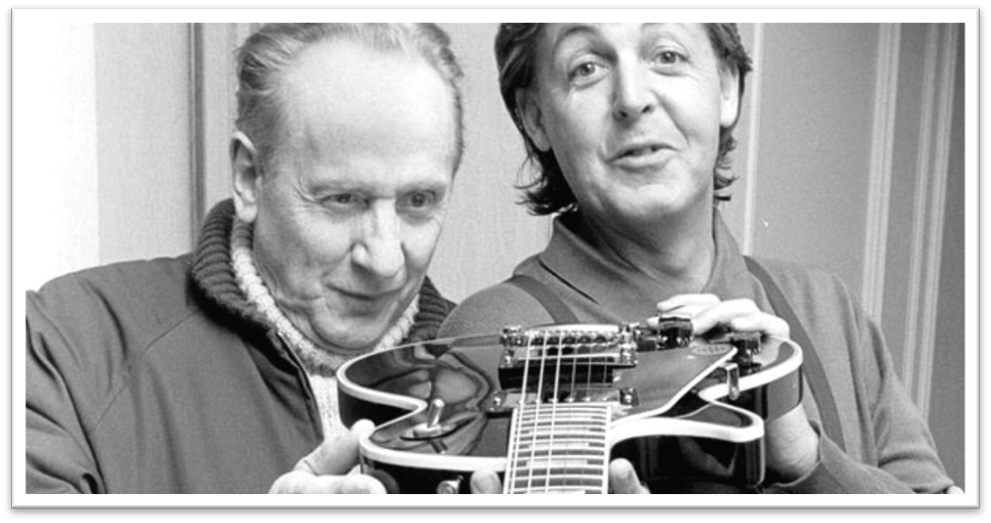
Lester William Polsfuss was born on June 9, 1915, in Waukesha, Wisconsin. He died on August 12, 2009, at age 94. The National Endowment for the Arts biography of Les Paul identifies him as a guitarist and inventor whose contributions to electric guitar design, overdubbing, and multitrack recording helped create the sound of modern American music.
He did not come from inherited wealth. According to a Wisconsin Public Radio interview with Les Paul Foundation program director Sue Baker, his parents divorced when he was young, and his mother supported the family by operating a taxicab business. Baker also shared a story about a music teacher sending him home with a note questioning his musical ability. Thankfully, his mother rejected the teacher’s assessment and encouraged him to keep going.
Les Paul’s early life helps explain the charitable story the foundation tells about its founder. Les Paul knew what it felt like to be underestimated and to lack the financial advantages available to other children. Music education and access to creative opportunities were not abstract concepts disconnected from his own life.
Les Paul’s Inventions and Musical Impact
Around age 13, he built a harmonica holder from ordinary materials so he could flip a double-sided harmonica and change keys without stopping to use his hands. It was a small invention, but it reveals the pattern that followed him throughout his career. He encountered a practical limitation, refused to accept it, and built something that worked better.
“There were harmonica holders being made commercially then, but they couldn’t change keys. You clamped the harmonica into them and you couldn’t change keys unless you took one harmonica out and put another one in. That wasn’t going to work for me because by now I had a good German Harmonica that played on both sides. So I made my own harmonica holder out of coat hanger wire and wood, and mounted my harmonica on pivot points so I could flip it over with my chin. On one side, if you blow, you’re in C; if you draw, you’re in G. On the other side, you blow in D, and draw in A. So that gave me four different keys I could play in with just one harmonica, by flipping it over when I needed to. That buffaloed everybody, and it was a lot of fun.”
– Les Paul, in his autobiography
By 1934, Lester was performing in Chicago under two musical identities: He played country music as Rhubarb Red and jazz as Les Paul. He had already been experimenting with guitar construction since childhood, and by the late 1930s he was working in New York with his first trio.
I like that version of Les Paul more than the polished mythology. He was not born as a chiseled statue holding an expensive guitar. He was a working musician with a practical brain, limited resources, and enough stubbornness to keep rebuilding equipment until it did what he needed.
That is also why the eventual fate of his first harmonica holder carries such an uncomfortable little twist. Decades later, that homemade childhood invention would appear in an estate auction and sell for more than $59,000. An object that began as a young boy’s inexpensive solution to a musical problem became a valuable piece of charitable estate property, and music history. We will come back to that.
Most famously, Les Paul was one of several important pioneers in electric guitar development. He is credited with having helped invent the modern solid-body electric guitar. His guitar protype, called The Log, is considered a precursor to the Gibson Les Paul.

The Les Paul Papers place the construction of the Log around 1941. It was an experimental solid-body guitar built to address problems that plagued amplified hollow-body instruments, especially unwanted feedback.
In January 1948, his career could have ended when a car accident crushed his right arm and elbow. Faced with possible amputation and the loss of normal movement, he chose to have the arm positioned so he could continue playing guitar. He spent roughly a year and a half recovering. Then he resumed performing and recording with Colleen Summers, who became professionally known as Mary Ford.
They married in 1949.
Their partnership helped introduce a broad audience to recording techniques that sounded almost impossible at the time. Their 1951 recording of “How High the Moon” used layered guitar and vocal performances to produce a sound that many listeners had never heard before. Ford could harmonize with recordings of herself. Paul could stack multiple guitar parts. Songs were no longer just a straightforward recording of musicians playing together in one room, but an intentional layering of sound.
In 1952, Gibson introduced the first commercial Les Paul model. The instrument eventually became associated with guitarists including Jimmy Page, Eric Clapton, and Jeff Beck. For many musicians, the name Les Paul now refers as quickly to the guitar as to the person. That is an extraordinary form of cultural immortality, although it also creates complicated questions about licensing, branding, ownership, and control after death.
Les Paul also won three Grammys, including two awards presented in 2006. He entered the Rock and Roll Hall of Fame in 1988 and the National Inventors Hall of Fame in 2005.
The Mahwah House
The Mahwah property is not just a celebrity residence where somebody famous once slept. It was the location of the history of American invention, music, recording, television, and family life.
Paul lived in the Mahwah house from 1952 until his death in 2009, approximately 57 years in the same place.
According to PBS’s Les Paul career timeline, he moved to Mahwah to produce a series of five-minute television programs featuring himself and Mary Ford. PBS identifies approximately 170 episodes of the program.
Think about that for a minute. Long before people turned spare bedrooms into podcast studios or filmed content for social media from their kitchens, Les Paul was producing short musical television performances from his home. The property was functioning as a hybrid residence, workshop, production facility, and family environment.
The eight-track equipment associated with the Mahwah studio was professional multitrack recording technology. It should not be confused with the consumer eight-track cartridges that later became popular in cars. In the recording context, separate tracks allowed musicians and engineers to isolate, combine, and manipulate performances in ways that expanded the creative possibilities of recorded music.
On December 3, 1959, Paul filed a patent application for an improvement involving an electric stringed musical instrument. The resulting United States Patent No. 3,018,680, issued in 1962, identifies the inventor as Les Paul of Deerhaven Road, Mahwah, New Jersey.
The patent does not give him ownership over the entire concept of the electric guitar. It documents a specific invention and places his inventive activity at the address now associated with the demolished house.
Paul also personally visited the Mahwah Museum and donated artifacts. His home was described as a virtual museum filled with the equipment and materials he used to develop recording devices. That supports the conclusion that he cared about local historical preservation. But, it does not prove he intended the house itself to remain standing forever.
Gene Paul’s Life and Legacy
Gene Paul deserves more than the label of Les Paul’s son.
His professional biography as a recording and mastering engineer explains that he developed engineering skills in the family studio and later worked at Atlantic Recording Studios. His credits include artists such as Aretha Franklin, Roberta Flack, Led Zeppelin, Ray Charles, Carole King, and others.
That background changes the emotional and historical context of his statements about the Mahwah house. He is not merely remembering a famous parent’s possessions from a distance. He learned his profession inside the environment that his father created.
The Mahwah house helped shape his own career.
Gene describes the property as his childhood home, his father’s workshop, and a laboratory where ideas were tested, abandoned, rebuilt, and put back into use.
But sadly, he says family members were not consulted about the destruction of the home and did not receive a meaningful opportunity to visit before it disappeared. He also describes concerns about handwritten notes, experiments, equipment, a jacket associated with one of his father’s commercials, and workbenches allegedly removed or rescued by people close to the family.
I cannot independently verify the condition of those objects, who recovered them, when they were removed, or whether anyone else had already cataloged them. Gene’s statements should only be attributed to Gene.
Even with that understanding, his narrative raises an issue that any thoughtful estate-planning lawyer should recognize:
Family grief is often intensified by exclusion.
People can accept that an old house is expensive, unsafe, impractical, or impossible to preserve. They have a much harder time accepting that nobody bothered to call.
The person left outside does not need to have a legal right to inherit a property before the absence of communication becomes painful. I will explore this more in depth later.
What the Record Shows
The publicly available listing history for 78 Deerhaven Road in Mahwah provides a useful sequence of events:
On May 12, 2026, Michael Braunstein appeared with recording engineer Tom Camuso on Bobby Owsinski’s podcast about rebuilding Les Paul’s original recording studio. The episode describes Braunstein as a third-generation Les Paul manager and discusses the restoration of Paul’s recording console, early multitrack equipment, and educational studio activities.
On May 13, 2026, the Mahwah property was listed for $990,000.
On June 1, 2026, the listing changed to pending.
On July 22, 2026, the property sold for $990,000.
In August 2026, Gene Paul’s public posts described the destruction of the home, and the Les Paul Foundation issued a public response defending its preservation work.
The real-estate listing describes a seven-acre parcel in the private Deerhaven community and refers to an existing structure of more than 6,300 square feet. The listing manages to misspell the word “guitar” and, misspells and misuses the word “infamous.”

This listing feels like an unintentional preview of the legacy preservation problem.
What’s also interesting is that Braunstein publicly discussed the movement and restoration of Les Paul’s studio equipment merely one day before the property appeared on the market. That chronology suggests the future of the equipment and the future of the real estate were already an active conversation at the time.
Social media posts attributed to Five Peaks Homes announced the developer’s acquisition of the property and described plans for a memorabilia bar honoring Paul. I contacted Five Peaks Homes to ask what led to the decision to instead “demolish” the home. I have not received a response.

According to Gene, the property was publicly marketed, went under contract, and closed before Gene’s was notified. If Gene’s account is accurate, the family learned far too late in the process to do anything to save the property.
Why a Historically Important House Can Still Be Demolished
People often assume that a house associated with a famous musician automatically receives legal protection. It does not.
The National Park Service explains the effect of National Register listing with unusual clarity. Federal listing alone generally does not prevent a private owner from altering or even destroying a property unless federal funding, licensing, permitting, or another applicable protective mechanism is involved.
State law, local ordinances, preservation easements, deed restrictions, charitable conditions, zoning requirements, and binding agreements can provide additional protection. Whether any of those rules applies depends on the actual property, the legal documents, and the relevant jurisdiction.
Mahwah has an established Historic Preservation Commission. The township explains that the commission maintains a survey of more than 300 historic sites, recommends formal designation, and reviews permit applications involving designated structures. Its public materials also identify a historic preservation ordinance and links to designated-site records.
That gives us concrete questions to investigate: Was 78 Deerhaven Road formally designated? Did the commission review any application? Did someone evaluate the house before the sale? Did a preservation restriction appear in the chain of title? Did a local museum, historical organization, or government agency receive notice?
I do not currently have documents answering those questions.
The fact that the home played an important role in recording history would not, by itself, create a legal prohibition against demolition. A well-intentioned estate plan could have addressed preservation, but maintaining a 6,300-square-foot building on seven acres requires more than affection. Someone would need authority, funding, insurance, maintenance arrangements, an operational plan, and an understanding of neighborhood restrictions.
If permanent preservation was impossible, the plan still could have addressed a final family visit, professional photography, archival documentation, artifact recovery, a commemorative marker, or a structured opportunity for relatives or a preservation organization to purchase the property.
No one can assume those options would have worked in this specific estate without reviewing the governing documents and local requirements. But, none of them would appear on their own simply because the house belonged to someone famous.
Who is Michael Braunstein?
Gene’s public statements identify Michael Braunstein as the person who controlled the foundation and played a central role in decisions involving Les Paul’s legacy.
Braunstein’s relationship with Paul did not begin after Paul’s death. A 2018 article published by the Les Paul Foundation reports that Braunstein managed Paul during the last 20 years of his life. The same article explains that Braunstein’s father and grandfather had previously handled Paul’s business affairs. A 2015 Washington Post report about a disputed Les Paul guitar identified Braunstein as the executor of Paul’s estate. An executor administers an estate under applicable probate authority.
Recent Les Paul Foundation filings identify Braunstein as its Executive Director, earning over $400,000 per year. A foundation executive manages or oversees activities within a charitable organization. Those titles can involve overlapping historical relationships, but they do not automatically give the same person unlimited authority over every asset. The foundation’s tax filings also identify Jeff Salmon and long time friend Arlene Palmer as trustees.
It certainly seems unusual for a business relationship involving multiple generations of one family to have produced continuing institutional influence while Paul’s descendants do not appear among the trustees listed in available foundation filings at all.
However, without access to the original estate documents, it is not appropriate for me to speculate if this outcome was Paul’s true intention.
History of the Les Paul Foundation
Les Paul created the Les Paul Foundation while he was still alive. The Les Paul Foundation’s public tax-filing history identifies tax-exempt status dating to March 1997. Foundation materials say Paul established the organization in 1995.
Those dates are important because they demonstrate that this foundation was not created for the first time after his death and for the transfer of his legacy into it without his involvement. The foundation functioned while Paul was alive.
Another detail that deserves more attention: On August 7, 2000, the Internal Revenue Service changed the classification of the Les Paul Foundation from public charity to private foundation because it had not established or maintained its classification. Classification of an organization as a public charity or a private foundation has practical consequences. The IRS explanation of public charities and private foundations describes private foundations as organizations commonly supported by a smaller group of donors and often controlled by a family or limited group of individuals. Public charities generally receive broader support and operate under a different regulatory framework.
Private foundations remain legitimate and frequently serve valuable charitable goals. They also face specific rules governing self-dealing, annual distributions, taxable expenditures, investments, and dealings with insiders.
In a 2024 Wisconsin Public Radio interview, foundation program director Sue Baker said Paul wanted the organization to remain dormant until his death and stated that he placed his entire estate into the foundation. This is the foundation’s public explanation of his wishes. It is not the same as reviewing a signed will, a trust, a schedule of assets, beneficiary designations, lifetime transfers, or the documents governing the charitable organization.
We cannot use this narrative to conclude that Paul’s family received nothing. He may have made gifts during life, created separate trusts, transferred assets outside probate, provided insurance benefits, or made other arrangements that are not visible in public filings. We also cannot assume that his foundation’s current structure reflects every detail of what he personally envisioned.
A Private Foundation Cannot Simply Function as the Family Bank
The foundation’s published charitable mission includes music education, recording innovation, exhibitions, and medical research related to hearing. Per the foundation’s grant guidelines, grants are not awarded to individuals.
That becomes especially relevant when Gene asks what happened to the $990,000 sale price and whether any portion should benefit his father’s family. If the foundation did own the property at the time of sale, the answer would not be as simple as directing the sale proceeds to Paul’s children just because they are his children.
The IRS identifies disqualified persons associated with private foundations, including substantial contributors, foundation managers, and certain family members. The IRS guidance on taxes imposed for self-dealing describes transactions that can create serious tax consequences when foundation assets are used for prohibited private benefit.
A founder’s relatives may participate in foundation governance or receive reasonable compensation for services under appropriate conditions. But, they cannot automatically treat charitable property as personal inheritance simply because a parent created the charity.
Even a proposed sale to a family member can require careful analysis. A transaction involving a disqualified person does not necessarily become permissible merely because everyone believes the price is fair. The IRS discussion of correcting foundation sales involving self-dealing illustrates how complicated these situations can become after an impermissible transaction occurs.
This is why family financial planning and charitable planning need to happen together before assets are committed. A parent who wants children to inherit money, own a home, receive instruments, or participate in decisions should not assume that a future charitable board can simply improvise a solution.
The people managing a private foundation may have legal obligations to preserve charitable assets for charitable use. The people administering a family trust may have duties to the beneficiaries. The two structures serve different purposes, and each requires its own instructions.
If Les Paul wanted his foundation to support music education while also protecting his family, or preserving his home, his estate plan would have needed to account for those objectives. Whether his actual documents sought to accomplish that, we cannot tell.
The Foundation’s Work and Mission
Any fair discussion of the Les Paul estate drama has to acknowledge that major portions of his legacy survived.
The Library of Congress finding aid for the Les Paul Papers identifies approximately 6,300 items, 44 containers, and 22.5 linear feet of archival material. It separately references approximately 17,160 index cards containing information about Paul’s recordings. The collection entered the Library of Congress as a gift from the Les Paul Foundation in 2010.
Its contents include manuscripts, photographs, correspondence, contracts, technical materials, royalty records, business documents, and family information. The finding aid identifies Deerhaven Association records from 1954 through 1972, a 1958 building permit, Gibson-related contracts and royalty statements, photographs involving Paul’s family, and decades of Braunstein-related business files. One folder even contains materials involving the family’s dog. These collections do, admittedly, an excellent job of preserving the human life of Les Paul, not merely the brand.
Likewise, the Smithsonian’s Les Paul Videohistory Project Collection contains interviews and related materials from 2005 and 2006. The Smithsonian identifies interviews conducted with Paul in Mahwah, as well as at music and invention-related events.
Therefore, it would be inaccurate to say that nobody documented Paul in Mahwah or that no visual historical record exists. What remains unanswered is whether anyone completed a comprehensive room-by-room survey shortly before the home’s destruction or offered his family access to that process, as Gene Paul pointed out in his Facebook posts.
There is also credible evidence that significant recording equipment survived.
In May 2025, the Los Angeles Times reported on the restored Les Paul Recording Studio in Hollywood. The article describes Paul’s original recording console, known as the Monster, and multitrack equipment known as the Octopus. It identifies student participation involving Carnegie Mellon University and Syracuse University.
The same report explains that equipment arrived in varying stages of disrepair, that wires had been cut, and that restoration took approximately 10 months. Those facts establish that the foundation completed substantial work to complete this restoration.
The foundation says the studio primarily supports education and identifies additional institutional partners. The foundation claims that approximately 80 percent of the studio’s use is educational.
The Estate Auction Already Happened
The Mahwah demolition was not the first time objects associated with Les Paul’s life left the family’s orbit.
In June 2012, Julien’s Auctions conducted a sale of property from the estate of Les Paul. The Les Paul estate auction generated nearly $5 million for a foundation supporting music education and innovation. The auction included instruments, recording equipment, personal objects, and other materials accumulated over Paul’s lifetime. A 1951 Fender No-Caster sold for $216,000. A 1982 Gibson Les Paul brought $180,000. A 1940s Epiphone Zephyr sold for $144,000.
The detail I keep returning to: The wire-and-wood harmonica rack Paul built as a child, sold with a vintage harmonica, brought $59,375.
It is difficult to imagine a better illustration of how complicated legacy planning becomes when a person’s ordinary possessions acquire historical and commercial value. A homemade childhood invention can simultaneously represent family history, evidence of an inventor’s early creativity, a museum-quality artifact, and a source of charitable revenue.
Each of those interpretations supports a different possible decision. Give the object to a child. Donate it to an archive. Exhibit it locally. Sell it and use the proceeds for music education. None of those choices is automatically unethical. The founder’s wishes, the legal ownership of the object, the family’s expectations, and the charitable organization’s obligations all influence the answer.
The larger point is that the house dispute did not arise in a vacuum. Valuable personal property had already been cataloged, sold, donated, restored, and dispersed for years.
Steve Miller Raised Planning Concerns Years Ago
In 2015, The Washington Post reported on a dispute surrounding a black Gibson Les Paul Custom associated with Paul’s longtime assistant and guitar technician Tom Doyle.
Doyle said Paul gave him the guitar in 1976 in connection with repair work. The instrument, later promoted as an exceptionally important historical guitar, became the subject of disagreement over its significance and how it was being marketed.
Braunstein questioned the claims surrounding the instrument. Paul’s son Rusty, identified in the article as Russ Paul, also challenged the promotional narrative. Their positions placed at least one member of Paul’s family on the same side as Braunstein in that particular disagreement.
That history prevents an overly broad conclusion that no member of the Paul family was ever consulted about anything. Rusty’s reported participation in a 2015 guitar dispute does not prove that Gene was consulted about the 2026 house sale, and Rusty died in 2015. But it does show that relationships surrounding Paul’s legacy have never fit neatly into a single, permanent family-versus-manager storyline.
The most memorable perspective came from guitarist Steve Miller, who described Paul as his godfather and expressed concern that longtime members of Paul’s circle had been left struggling after his death. Miller believed there should have been a plan to provide for the people who spent years helping Paul continue his work.
There is no public record that I have found establishing that Doyle or any other associate was legally entitled to receive anything from Paul’s estate. An adult employee, assistant, friend, or godchild does not automatically inherit because of loyalty or years of service.
But the 2015 disagreement revealed a problem that estate-planning attorneys see regularly. Clients sometimes assume trusted people understand their wishes while leaving no enforceable financial provision, no clear instructions about personal property, and no explanation of who gets to control the story afterward.
When that happens, everyone remembers the same relationship differently, especially after a valuable guitar enters the picture.
A Musician’s Legacy is More Than Guitars and Real Estate
The Les Paul estate raises questions about intellectual property and the long-term administration of a creative career.
Music-related assets can include ownership interests in compositions, sound recordings, unpublished material, licensing revenue, trademarks, name-and-likeness rights, contractual royalties, performance income, archival recordings, digital files, and physical master tapes. The owner of a guitar does not necessarily own the recording made with it. The owner of a master recording does not necessarily control the underlying musical composition.
The United States Copyright Office explains the general duration of copyright, including the life-of-the-author-plus-70-years rule. Older works, corporate authorship, joint authorship, publishing dates, contractual transfers, and historical recording rules can change the analysis. The Music Modernization Act rules for pre-1972 sound recordings add another layer. Certain older recordings receive federal protection for periods determined by the date of fixation and the applicable statutory schedule. Federal law also recognizes copyright termination rights in some circumstances. The Copyright Office guidance on termination of transfers under 17 U.S.C. Section 203 explains that authors or eligible surviving relatives and representatives may have rights to terminate certain grants when statutory requirements are satisfied.
None of that, however, establishes who currently owns any specific Les Paul copyright, trademark, royalty stream, or recording. Answering that questions would require contracts, chain-of-title records, registrations, licenses, and the actual estate documents.
The estate planning lesson is broader. A musician can leave descendants a famous name without giving them meaningful authority over the business built around that name. A charity can own valuable rights without being free to distribute the income to family members. A manager can supervise licensing without personally owning the underlying assets.
For artists and their families, estate planning should identify each category of property, the actual owner, the decision-maker, the financial beneficiary, and the person responsible for preserving unpublished or historically significant work.
The Walton Family as a Successful Example
The Walton family provides a useful comparison because public records reveal two different structures operating alongside each other.
The Walton Family Foundation’s history states that Sam and Helen Walton established the foundation in 1987. According to the foundation, multiple generations of their descendants and spouses participate in its work, and its board consists entirely of family members.
That arrangement does not prove the Walton family is free from disagreement or that every wealthy family should build a similar organization. It does show that family participation in charitable governance can be intentional rather than incidental.
Sam and Helen Walton apparently wanted philanthropy to help connect future generations. Their charitable structure reflects that goal by giving descendants a continuing institutional role.
Public securities filings also show a separate system for private family ownership.
A June 2026 Securities and Exchange Commission Form 4 filed for the Walton Family Holdings Trust reports a distribution of 767,000 Walmart shares to a trust beneficiary on June 23, followed by a distribution of 1,703,000 shares to a trust beneficiary on June 24.
The charitable foundation did not make those distributions. A family trust did.
That is the important takeaway: a private foundation can hold charitable assets and pursue charitable purposes. A separate family trust can hold family assets and distribute property to private beneficiaries. Family members can participate in philanthropy without pretending that the charitable foundation is their personal checking account.
This comparison should not be reduced to the idea that wealthy people need a billion-dollar family office. Ordinary families can apply the same general approach on a smaller scale. Decide what belongs to charity, decide what belongs to family, identify who has authority over each category, and make the governance structure reflect those decisions.
If a founder wants children to serve on a foundation board, that preference can be addressed through governing documents and succession planning. If a founder does not want family members in control, the reasons and expectations should still be communicated clearly enough to reduce surprise later.
Comparison to the John Winston Ono Lennon Estate
As someone who loves the Beatles, I kept thinking about John Lennon while reading Gene Paul’s statements. His estate is another useful comparison.
According to the National Trust’s history of the Beatles’ childhood homes, Yoko Ono purchased Lennon’s childhood home, Mendips, in 2002 and donated it to the National Trust. The National Trust now preserves the property as a place where visitors can celebrate and understand the physical environment that shaped Lennon’s early life.
That outcome did not happen because John Lennon became famous and therefore the house magically protected itself. Yoko Ono identified its historical value, acquired it, selected an institutional steward, and arranged for its preservation.
The National Trust also preserves Paul McCartney’s childhood home. The National Trust specifically stated that the family declined an opportunity to buy that property before it was offered to the organization. Those two histories show that preservation can take different paths, but each successful outcome depends on someone having the authority, resources, and intention to act.
The Lennon estate also shows intergenerational involvement in managing the Lennon musical legacy: Sean Ono Lennon’s was appointed as a director for Apple Corps Limited effective October 5, 2020.
I respect what Yoko Ono accomplished in keeping John Lennon’s work visible and preserving a place connected to his history. All Beatles fans, no matter their opinion of Yoko Ono, should acknowledge that Mendips remains standing and available to the public because Yoko Ono took concrete steps to protect it.
But that is not to say the Lennon estate was not without conflict. It is well known that Julian Lennon endured a prolonged conflict to get his inheritance his father’s estate.
That conflict identified another estate planning problem: A surviving spouse can become the primary steward of a famous person’s legacy while a child from an earlier relationship feels excluded from financial decisions, personal property, or the story of that person’s life.
Thus, while preserving a childhood home and protecting a public legacy are admirable achievements, they do not automatically prevent resentment inside a blended family.
For estate-planning clients, the useful conclusion is not that the Lennon family got everything right or everything wrong. The important lesson is that cultural preservation, business succession, spousal protection, and fair treatment of children are all separate planning goals that require separate attention. Accomplishing one goal does not guarantee the others.
Was the Mahwah Outcome What Les Paul Intended?
This is the question I wanted answered when I started reading Gene’s statements.
The honest response is that we cannot know.
The foundation existed during Paul’s lifetime. His longtime manager remained involved after his death. A foundation representative has said he wanted his estate to support charitable work. Substantial historical materials have been preserved. Those facts support the conclusion that Paul cared about continuing his public legacy.
But, they do not establish whether Les Paul wanted the Mahwah house sold, whether he anticipated demolition, whether he expected his children to be offered the opportunity to participate in foundation governance, or whether he believed someone would notify his family before the property disappeared. They also do not establish if his children were intentionally disinherited.
What I can say is…
Most people do not sit down with an estate-planning lawyer hoping their children will discover a family home’s destruction through photographs shared online. Most people do not want their legacy to produce public accusations, unanswered questions, or confusion over who had the right to make important decisions.
If Paul intentionally excluded his children from certain roles, a carefully documented explanation might have reduced misunderstanding. If he expected them to participate, enforceable governance provisions might have protected that expectation. If he wanted the property preserved, he would have needed a realistic preservation plan and funding. If preservation was impossible, he could have directed a process for family access and historical documentation.
I cannot say whether any of those approaches would have worked under the actual facts of his estate. I can say that outcomes involving surprise, silence, and preventable family conflict should be addressed while the client is still alive, so they get the opportunity to explain what they want.
What Families Can Learn From the Les Paul Estate Drama
Sometimes a parent intentionally leaves a child less than that child expected. Sometimes a surviving spouse and children from an earlier relationship need separate protections. Sometimes a client wants a charity to receive most of the estate. Those decisions can be legally valid when properly implemented, but silence and ambiguity increase the odds that family members will question what happened.
An explanation does not have to disclose every family disagreement to the public. It should leave enough reliable evidence for fiduciaries and, if necessary, a court to understand that the plan reflected the client’s actual choices.
A well-planned legacy starts with the questions nobody wants to answer.
I do not believe the primary lesson from Les Paul’s estate is that every wealthy musician needs a museum or that every child deserves a seat on a charitable board.
The lesson is that a legacy plan should reflect how the client wants real people to experience the plan after the client is gone. That requires more than signing a will and hoping everyone behaves.
If a client wants a particular home or object to remain in the family, the documents should identify the property and provide a workable method for carrying out that instruction.
Estate Planning Guidance
Charitable gifts can be generous, meaningful, and entirely consistent with taking care of family members, but estate planning should consider the best sequence of events.
If a client wants a child to receive financial support, the plan can address that objective through a properly structured inheritance, trust, insurance arrangement, lifetime gift, or other lawful vehicle. If the client also wants to support a private foundation, the charitable contribution should be coordinated along side those private arrangements.
Waiting until assets belong to a foundation and then asking the board to distribute them to relatives can create problems that competent planning could have addressed earlier.
The Walton family provides a visible example of separate charitable governance and family trust distributions. The scale may be unusual, but the underlying legal concept is available to families with far less wealth.
Should the family have a voice?
When creating a private charitable foundation, a founder can choose professional management, family governance, independent oversight, or some combination of all three.
If family members should serve on a board, that intention needs to appear in appropriate governing documents. If the founder prefers independent directors, the plan can still address whether relatives receive updates, serve on an advisory committee, participate in annual meetings, or have an opportunity to comment before major historical assets are sold.
Family participation does not mean relatives can use charitable property for personal benefit. It means the founder can consider whether people connected to the family history should remain involved in decisions about how that history is presented.
The plan should also identify successors or the process for nominating successor trustees. A trusted manager or director will not serve forever. Governance rules should explain who appoints future leaders, how conflicts are addressed, and how the organization remains accountable to its charitable purpose after the people who knew the founder are gone.
Create a Plan for Historic Homes and Personal Property
Keeping a historic home requires money, insurance, repairs, security, maintenance, access, and an organization capable of carrying the responsibility. An emotional instruction to preserve a house forever is not enough if nobody can afford the roof.
Where appropriate, a client can evaluate museum partnerships, preservation organizations, charitable gifts, documented maintenance funding, local historic designation, or lawful deed restrictions. The exact tools depend on the property, jurisdiction, ownership structure, and long-term costs.
If preservation is unrealistic, the plan can still protect dignity. It can identify who receives notice before a sale, who may inspect the property, whether relatives receive a final opportunity to visit, how personal belongings are inventoried, whether professional photographs or video should document the building, and any other requirements the client may deem important.
A family purchase option or right of first refusal might be worth considering before charitable ownership creates additional restrictions. Once a private foundation holds an asset, a sale involving the founder’s relatives can raise federal self-dealing concerns and requires specialized review.
Some of the most meaningful belongings will not have the highest appraisal. A handwritten lyric, a workbench, a photograph, a favorite jacket, or a homemade harmonica holder can represent an entire relationship. An inventory of personal property should be included in your estate planning, when possible, to identify emotional and historical value of assets alongside financial value.
Address Compensation, Oversight, and Conflicts Before They Become Public Questions
A private foundation needs more than an inspiring mission statement.
Its governing structure should identify who approves compensation, how salaries are evaluated, what financial information board members receive, how conflicts of interest are disclosed, and how charitable activities are documented. The New York Attorney General’s charitable governance resources emphasize responsible oversight and fiduciary accountability for charitable organizations. A well-run board should understand the organization’s budget, monitor its programs, evaluate compensation, and document significant decisions.
For a founder who built a public career, legacy stewardship also includes reputation. A charity can comply with technical rules and still damage public trust if family members feel excluded, financial disclosures raise unanswered questions, or important property disappears without a clear explanation.
Independent oversight can protect everyone involved, including executives whose decisions might otherwise be judged through incomplete information and angry social-media posts.
Preserve Creative Work With the Same Care Used for Financial Assets
Musicians, photographers, authors, inventors, and business owners often leave behind assets that do not fit comfortably into a standard household inventory.
Those assets may include unfinished songs, original recordings, licensing agreements, websites, digital files, publishing interests, trademarks, instruments, correspondence, and historical equipment. Some have substantial commercial value. Others have value because family members understand the story attached to them.
A complete plan should identify who can access the material, who owns it, who may license it, who receives revenue, and which items should be preserved, donated, or offered to relatives.
Communicate Before the Client Is No Longer Available to Explain
The people most affected by an estate plan cannot call the person who created it after that person dies.
That sounds obvious, but estate disputes demonstrate how often families behave as though the conversation can be postponed indefinitely.
A client does not have to disclose every financial detail to every relative. But when a plan places a longtime business adviser in control, gives substantial assets to charity, excludes a child from management, or creates different treatment among family members, thoughtful communication can reduce confusion and suspicion.
If the founder intends an unusual result, the attorney should help create a clear and reliable record explaining it. If the founder assumes family members will be consulted, the plan should identify who must consult them and when. If the founder expects a house to remain standing, someone should calculate how that expectation will be financed.
Good planning cannot guarantee that nobody will be disappointed, but it can make the outcome easier for those affected to understand and harder for them to misrepresent.
The Family Is Part of the Legacy
The Les Paul Foundation has preserved valuable archives. Important recording equipment still exists. Students can study technology that helped create modern multitrack recording. Museums continue to exhibit artifacts associated with Les Paul. None of that disappears because a building came down.
However, Gene Paul’s grief does not disappear either.
His father lived in the Mahwah house for decades. Gene learned recording there. His family built memories inside rooms that also shaped music history. Whatever the technical condition of the property, the disappearance of that setting represents a real loss.
I know what it feels like to lose a home and realize that ordinary objects carried more of your history than you understood while they were still within reach. A guitar, a handwritten note, a workbench, or an old jacket may look replaceable to someone preparing an inventory. To the person who remembers who used it, the same object can hold an entire chapter of a life.
I cannot conclude that Les Paul wanted his children excluded. I cannot conclude that he wanted the house preserved forever. I cannot conclude that Braunstein or anyone else violated a legal duty. The documents necessary to answer those questions are not publicly available.
However, as an attorney, I can conclude that better communication, carefully defined authority, advance preservation planning, and separate financial arrangements for family and charity can reduce the risk of exactly this kind of very public conflict.
A thoughtful estate plan should do more than transfer wealth efficiently. It should identify the people, values, stories, and relationships the client wants to protect. It should account for what happens when a house becomes too expensive to maintain, when a charitable foundation outlives its founder, when children disagree with a business adviser, and when a lifetime of personal belongings becomes valuable to strangers.
Les Paul spent his career finding ways to let multiple voices exist within the same recording.
A good legacy plan should leave room for more than one voice, too.


Leave a Reply