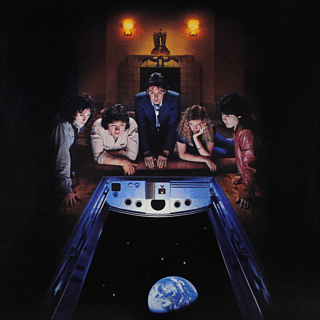
Back to the Egg is the last Wings studio album, released in 1979, and it feels like the band was trying to prove something one last time.
By the late 1970s, Wings had already gone through multiple lineup changes as well as enormous commercial success. Band on the Run had cemented them as a real band, not just Paul McCartney’s post-Beatles project. But the music industry was changing. Punk and new wave were rewriting the rules, and arena rock was starting to feel dated.
Back to the Egg is Wings responding to that moment in real time.
The lineup on this record is part of the legacy. Laurence Juber joined on lead guitar and Steve Holley on drums, and both brought a sharper, more aggressive energy. This version of Wings sounds tighter and more direct than earlier incarnations. The album was co-produced by Paul McCartney and Chris Thomas, which turned out to be a smart pairing. Chris Thomas had credibility in both classic rock and punk-adjacent spaces, and the production reflects that.
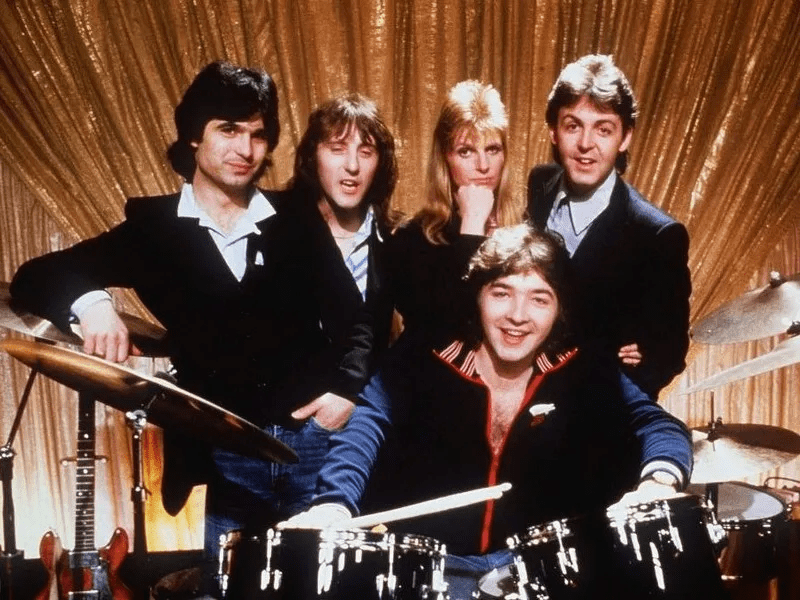
Recording took place across several locations between 1978 and early 1979, including Paul’s Scottish studio at Spirit of Ranachan, Lympne Castle in Kent, and Abbey Road. You can hear that it wasn’t made in one controlled environment. The album jumps between moods and textures, sometimes abruptly, and that lack of uniformity feels intentional. It gives the record a feeling like you’re stepping into different rooms of the same building.
The album opens with “Reception,” which feels like flipping through radio stations before one finally comes in clearly. It lets you know right away that this is meant to be experienced as a whole, not shuffled or cherry-picked. “Getting Closer” hits immediately after and makes the point even clearer. It’s driving and restless, and it sounds like Paul choosing momentum instead of comfort.
“We’re Open Tonight” is barely a song in the traditional sense. It feels more like someone opening the door and waving you inside. That makes the jump into “Spin It On” even more jarring in the best way. It’s fast, sharp, and surprisingly aggressive. Honestly, it’s one of the hardest-hitting things Wings ever recorded. “Again and Again and Again,” sung by Denny Laine, breaks things up in a really necessary way and keeps the album from feeling too centered on one voice or one mood.
“Old Siam, Sir” is one of the most underrated tracks here, with a slightly menacing edge and a groove that feels almost anxious. This song feels uneasy in a way I love. It sounds like realizing something is off and not being able to fully explain it yet. There’s suspicion here, tension, and a constant sense of being on guard.
“Arrow Through Me” shifts gears completely. This one is about getting hurt by love and acknowledging it plainly, without blame or theatrics. There’s something very adult about how direct it is. Just the quiet realization that something got to you more than you expected.
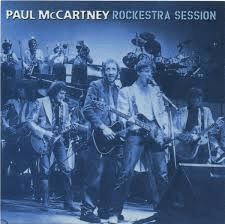
“Rockestra Theme” is the album’s most famous moment and its biggest experiment. It was recorded at Abbey Road with a huge group of well-known rock musicians all playing together in the same room. They called themselves the Rockestra. It’s loud, celebratory, and intentionally over the top. It later won the Grammy for Best Rock Instrumental Performance, which feels fitting given how much it sounds like a room full of musicians having a blast.
The Rockestra guests:
- Pete Townshend (The Who) – guitar
- John Paul Jones (Led Zeppelin) – bass, keyboards
- John Bonham (Led Zeppelin) – drums
- Gary Brooker (Procol Harum) – keyboards
- Hank Marvin (The Shadows) – guitar
- Ronnie Lane (Small Faces and Faces) – bass
- David Gilmour (Pink Floyd)– guitar
The second half of the album leans more conceptual. “To You” keeps the rock momentum going, while “After the Ball / Million Miles” introduces a more cinematic, reflective tone. “Winter Rose / Love Awake” continues that drifting, dreamlike quality. “The Broadcast” reinforces the album’s framing device and reminds you that this record is meant to feel like a transmission rather than a diary.
“So Glad to See You Here” brings the Rockestra energy back one last time and feels communal in the best way, like a group of musicians feeding off each other in real time. “Baby’s Request” closes the album by jumping backwards stylistically, ending things with a vintage, almost pre-rock-and-roll feel. It’s an unexpected choice for a final Wings album, but it works. It feels like a bow instead of a cliffhanger.
Back to the Egg‘s total album runtime is just over 42 minutes.
Side A runs about 21 minutes
Tracks: “Reception,” “Getting Closer,” “We’re Open Tonight,” “Spin It On,” “Again and Again and Again,” “Old Siam, Sir,” “Arrow Through Me”
Side B runs about 21 minutes
Tracks: “Rockestra Theme,” “To You,” “After the Ball / Million Miles,” “Winter Rose / Love Awake,” “The Broadcast,” “So Glad to See You Here,” “Baby’s Request”
Commercially, Back to the Egg performed well but not spectacularly. It reached the top ten in both the UK and the US, but it didn’t dominate the way earlier Wings albums had. That lukewarm reception has become part of its reputation. This is the album people either overlook or quietly defend.
What makes Back to the Egg worth revisiting is how alive it feels. It’s not tidy. It’s not universally beloved. But it captures Wings actively engaging with their moment, trying new things, and resisting the urge to play it safe. It sounds like a band that still cared deeply about being a band, right up until the end.
That’s why fans keep coming back to this record. It isn’t perfect, but it’s honest. And it feels like the sound of Wings refusing to stand still, even when the world was already moving on.


Leave a comment